
Indoor air quality plays a crucial role in residential and commercial buildings alike, offering numerous benefits such as comfort, efficiency, safety, productivity enhancement, and most importantly, overall health. Many office buildings have multiple air pollution sources, and some may not be adequately ventilated.
Furthermore, individuals often have less control over their work environment compared to their homes. Air quality remains a pressing issue as we continue to navigate the COVID-19 pandemic. Consequently, facility owners are investing in various products to minimise the spread of airborne diseases.
Improving indoor air quality starts with discipline, regular building, and HVAC maintenance. Follow these five steps to achieve a healthier indoor environment.

Elevating Indoor Air Quality
in Your Commercial Premises
Maintaining exceptional indoor air quality requires consistent efforts, routine building maintenance, and
proper HVAC upkeep. By following these five steps, you can create a healthy indoor environment for everyone.
proper HVAC upkeep. By following these five steps, you can create a healthy indoor environment for everyone.
Comprehensive Guide to Elevating Indoor Air Quality in Your Commercial Premises
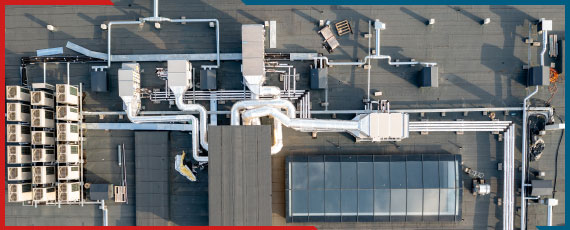
Five Strategies for Enhancing Indoor Air Quality in Commercial Buildings:
1. Optimise Building Ventilation
To decrease indoor air pollutant concentrations, enhance outdoor air circulation in your facility. You can increase ventilation by correctly using economisers, devices that supplement mechanical cooling with fresh air, to efficiently augment fresh air ventilation. Operate HVAC systems during all occupied hours to ensure clean air enters and is distributed throughout the building.
When feasible, open windows and doors for cross-ventilation, considering weather conditions, outdoor air quality, occupant safety, and HVAC system capabilities. However, evaluate outdoor air quality carefully when introducing fresh air to prevent outdoor pollutants from entering your building.
Proper ventilation and fresh outdoor air circulation help control indoor temperatures, dilute indoor airborne pollutants from internal sources, reduce pollutant concentrations, and improve indoor air quality.
2. Replace HVAC Filters Regularly

If not maintained routinely, HVAC systems can accumulate dust and air pollutants that can degrade indoor air quality and lead to health issues such as respiratory illnesses or allergies.
Installing HVAC access doors and panels is essential during maintenance to provide technicians with convenient access to HVAC components. Blocked filters can disrupt airflow and cause pollutant build-up in enclosed spaces.
3. Maintain Cleanliness
Upholding cleanliness is one of the most straightforward ways to reduce air pollutants in your commercial building. This will help minimise the spread of allergens from coughing, sneezing or other activities that contaminate the area and spread viral diseases.Clean and sanitise frequently used items such as desks and computer devices with a damp cloth and antiseptic solutions to minimise dust and bacteria build-up. If your establishment has carpets, vacuum them at least twice a week with a HEPA filter to efficiently remove allergens and dust.
In the post-COVID era, facility managers are exploring new disinfection methods with high efficacy and reduced maintenance costs. For this reason, numerous businesses and schools are implementing hospital-grade disinfection using Ultraviolet Germicidal Irradiation (UVGI) and UV-C devices such as the UVD Robot by Sanalife. The CDC strongly recommends Ultraviolet Germicidal Irradiation (UVGI) as a tool for viral mitigation in indoor environments.
4. Implement Source Control
Eliminating or minimising emissions from individual pollution sources is the most effective way to improve indoor air quality. For instance, avoid using fixtures containing asbestos, a known air contaminant.
Modifying gas stoves can also help reduce your building's emissions. Source control is a more cost-efficient solution for maintaining indoor air quality than increasing ventilation, as the latter can raise energy costs.
Consider installing in-duct air purifiers into your existing HVAC system to reduce airborne contaminants. Choose an air purification solution that does not produce ozone, such as Sanalife's ActivePure Induct Guardian.
5. Install Commercial Air Cleaning Devices
Investing in commercial-grade equipment for your facilities, such as air scrubbers, air purifiers, and dehumidifiers, is highly beneficial for maintaining indoor air quality. You will notice the improvements immediately after implementing these air-cleaning devices.
It's important to note that not all air purifiers operate in the same manner. While some manufacturers produce air purifiers, not all adhere to standards concerning air filtration, testing efficacy, and operational safety. When evaluating air purifiers, it's crucial to understand the mechanical and electrical air cleaning technologies they employ.
When selecting the most suitable air filter for your business, take into account efficiency metrics such as air exchanges per hour (ACH) and cubic feet per minute (CFM). These measurements will assist you in finding the ideal air purifier to ensure optimal air exchanges for the spaces you aim to safeguard.
Contact JC Watson
Don't hesitate, ensure your business benefits from cutting-edge VRF and VRV air conditioning solutions with JC Watson. Reach out to us today on 020 3733 3050 or email us at info@jcwatson.co.uk to arrange a complimentary site survey and obtain a comprehensive report on the most suitable air conditioning options for your business.
Prioritising Indoor Air Quality for a Healthier Environment
As a building owner or facility manager, demonstrating a commitment to enhancing the air quality of your commercial buildings reflects your concern for the well-being of all occupants. Not only does improved air quality help reduce the spread of airborne illnesses, but it can also contribute to lowering energy costs. In the post-COVID world, prioritising air quality should be the objective of every building owner. Investing in high-quality products to maintain indoor air quality will create safer indoor environments, promoting the overall health of occupants.